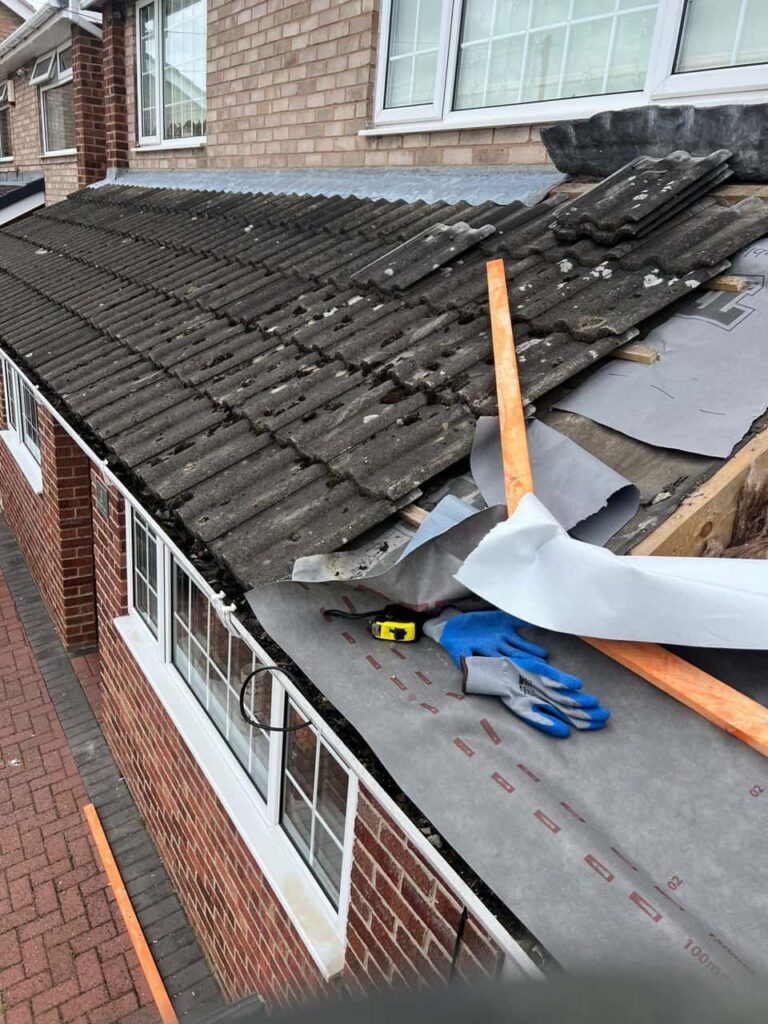
Discovering water entering through the roof can be unsettling, particularly during heavy rain. A visible drip, damp ceiling or spreading stain means moisture has already passed through at least part of the roofing system, so the problem deserves prompt attention.
The immediate priority is to limit internal damage and arrange a professional assessment. For homeowners in Driffield, East Riding of Yorkshire, acting early can prevent a localised roof leak from affecting a wider area of the property.
What to Do After Finding a Roof Leak
A calm, methodical response will help protect the room while providing useful information for the roofer. Avoid climbing onto the roof, especially while surfaces are wet or weather conditions remain poor.
Protect the Area Beneath the Leak
Move furniture, electrical items and other belongings away from the affected area where it is safe to do so. Place a suitable container beneath an active drip and use towels or protective coverings to manage splashes.
Check the container regularly if rain continues. Water can spread further than expected, so inspect the surrounding ceiling and nearby walls for additional damp patches.
Be Cautious Around Electricity
Do not touch wet electrical fittings, switches or cables. If water is entering near lighting or other electrical components, keep clear of the affected area and seek appropriate professional assistance.
Never take unnecessary risks to move an item or inspect the source. Personal safety should remain the priority until the affected area can be assessed.
Do Not Climb Onto the Roof
The position of the internal drip rarely confirms the location of the external defect. Water may travel along underlay, roof timbers or ceilings before becoming visible.
Attempting to inspect a wet roof can be dangerous and may cause further damage to tiles or other materials. A roofer can use appropriate access equipment and examine the area without relying solely on the location of the ceiling stain.
Record What You Can See
Photographs of the damp area can help show how the problem develops. Note when the leak began, whether it appears only during heavy or wind-driven rain, and how quickly the affected patch grows.
Other useful observations may include:
- Recent movement or loss of roof tiles
- Water appearing near a chimney or roof junction
- Dampness close to an external wall
- Debris or mortar found around the property
- A leak that has occurred in the same place before
- Overflowing or poorly draining guttering
These details do not replace an inspection, but they can help guide the initial investigation.
Avoid Unplanned Internal Punctures
A ceiling that is holding water may sag or bulge. Do not puncture it casually, as trapped water and weakened material could fall suddenly.
Keep people away from the area and arrange professional guidance. The condition above the ceiling needs to be understood before any action is taken.
Arrange a Roofing Assessment Promptly
A roof leak rarely improves without attention. Even if the dripping stops when the rain passes, moisture may remain within insulation, timbers or ceiling materials.
A professional inspection should identify the entry point, the route taken by the water and the extent of any affected roofing components. This provides a sound basis for repairs instead of relying on a temporary surface patch.
Why the Leak May Be Away from the Visible Stain
Pitched roofs contain overlapping materials designed to direct water downwards. If water passes beneath the outer covering, it can travel along underlay, battens or rafters before finding an opening into the room below.
The source may therefore be higher up the roof or to one side of the visible damp patch. Common areas that require inspection include tiles, valleys, ridges, flashing, roof junctions and penetrations.
What Might Be Causing the Leak?
Possible causes include cracked or slipped tiles, deteriorated flashing, damaged underlay, failed mortar and blocked drainage. On flat sections, splits, open seams or defects around outlets may allow water to enter.
Several small faults may also be working together. Identifying every contributing issue is important if the repair is to prevent the leak from returning.
Why Temporary Patching Is Not Always Enough
A temporary measure may reduce water ingress until suitable repairs can be completed, but it should not be mistaken for a permanent solution. Applying sealant to the most obvious gap can leave concealed defects untouched.
Effective roof leak repairs address the failed component and check the surrounding materials. This reduces the likelihood of repeated visits for the same underlying problem.
Check the Roof After Repairs
Once the source has been repaired, the surrounding roof should remain under observation. Internal materials may take time to dry, so an existing stain does not always mean the repair has failed.
However, fresh dampness, renewed dripping or an expanding mark should be reported promptly. A clear record of the original leak will help distinguish residual moisture from continuing water ingress.
Conclusion
When you discover a roof leak, protect the room, keep away from wet electrical fittings, avoid accessing the roof and record the visible signs. The next step should be a professional assessment that traces the water back to its true point of entry.
TRP Roofing Driffield provides roof leak inspections and repairs for properties in Driffield, East Riding of Yorkshire. If you have noticed a drip, damp patch or other sign of water ingress, contact our team to arrange an assessment and appropriate repair.
Call us on: 01377 310 905
Click here to find out more about TRP Roofing Driffield
Click here to complete our contact form and see how we can help with your roofing needs.